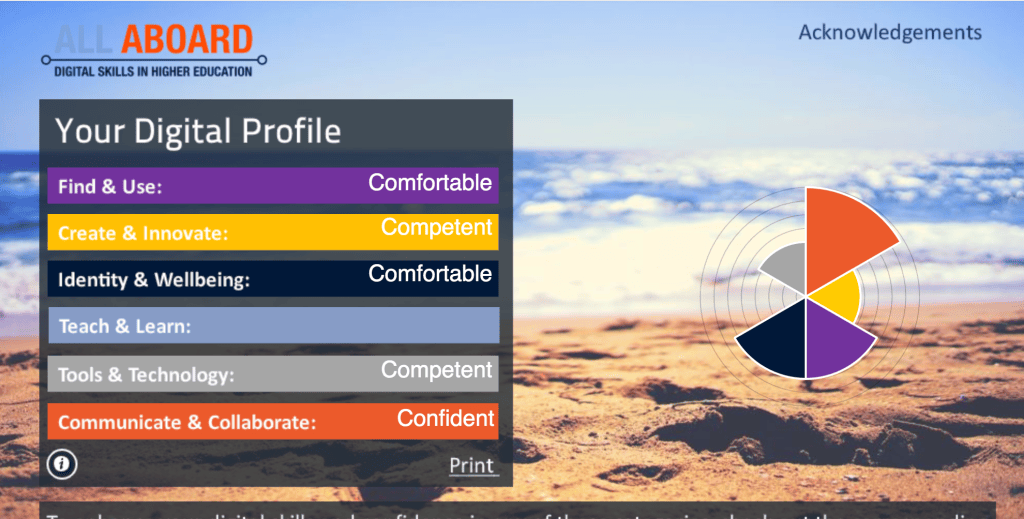
before entering this course, I thought that digital literacy is basically having digital skills but to my surprise I found out that they are completely different but actually compliment each other one way or another. as we went on and upon reading the article I learned that skills are basically the knowledge of tasks on a certain digital tool for example being able to share something or upload pictures on social media or maybe even being able to install the picture in this blogpost and typing it , however , digital literacy is the knowledge on how to use these skills efficiently , cautiously and respectfully. digital literacy allows us to be aware and have proper judgement when using digital skills and tools such as the importance of mindfully writing things on social media and being aware of the consequences such as acknowledging political messages that might be of high risk in Egypt or how your social media profiles might affect employment oppurtunities. in my digital profile i was confident in communicating and collaborating as it is something im currently studying in depth as a marketing major and i use it often also in many other courses when in group projects or so , i was also comfortable in the find and use as this is somethng i gained knowledge of over my years as a student whilst conducting assignments and research , i did not choose confident seeing that there are some methods i have basic knowledge of such as reseraching in books. i was competent in creating and innovating seeing that at this stage, i am not taught to creatively express myself using digital tools a lot nowadays seeing that most of my learning is done in the traditional ways and therefore i just know the basics. in identity and wellbeing, i used to be just competent but during this course i have become comfortable as i learned a lot about data safety and online security and how i can ensure them. lastly, i believe that i am competent in tools and technology as i know the basic functions of the tools that help me as a student.
I actually chose the theory path as I found the articles were of extreme relevance,importance and interest as well , I also chose my articles to be , “show me my data , I’ll tell you who I am”, “how do the biggest internet companies make money?” and “breaking free of the addiction machine”
I will start by reflecting on how do the biggest internet companies make money, this was a question I always wondered about and that is why I chose this article, I found out that these companies actually have several ways to get their revenues and they are actually split into categories. to begin with, there is the attention merchants, these companies benefit from gathering information about individuals and their interests and then sell them to companies in order for companies to be able to personalize ads and then they allow them to advertise on their platforms, examples of attention merchants are Facebook , google and Baidu. alphabet (google mother company) has several revenue streams such as digital ads, owning Adsense and admob, an ad placing service, and they also sell devices and software such as home assistants and apps. Facebook is actually very similar to an ad company rather than a social media site seeing that 98.5% of their revenues are actually from ads and 1.5% from games and apps , Baidu serves the Chinese land and provides services such as being a search engine, selling ads (80% of revenue) and small innovations such as a video streaming platform and investing in AI
second comes , the machinists , these companies have a main stream of revenue from selling softwares and devices, an example of these companies are Microsoft and apple , Microsoft actually have most revenues from product sales and productivity from Microsoft office and LinkedIn and also clouds. apple also mostly get revenue from device sales and some from services such as Apple Pay.
lastly, the retail middlemen such as Alibaba and amazon and these companies sell everything online and have recently opened few physical shops and have expanded into more Digital areas such as amazon having video streaming subscriptions and Ali baba having clouds and softwares such as AutoNavi.
the second article is “show me my data , I;ll tell you who I am” this article speaks about how our privacy is constantly invaded by data brokers that sell our data to companies in order for them to be able to effectively target us and it then poses the question of ” if we tell them who we are , will they stop invading our privacy?” it also makes the point that we have very little control over our profiles and has then explained it in a rather simple but effective illustration.
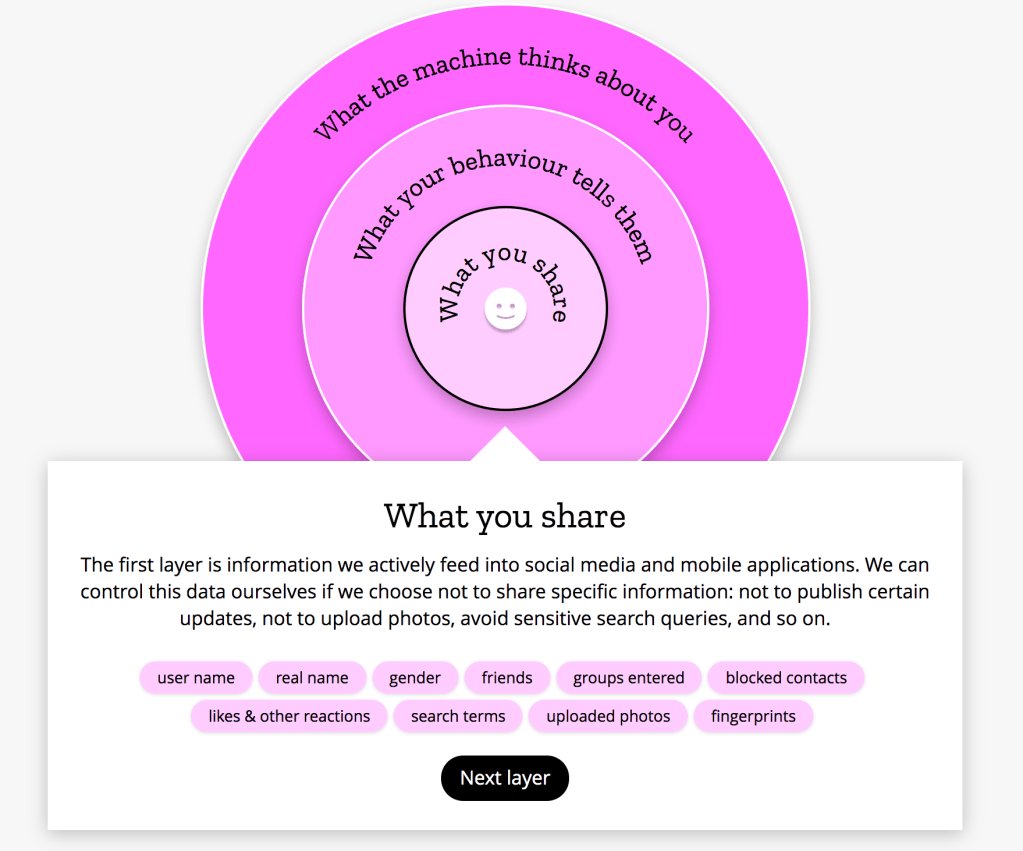
the diagram shows circles of data given to corporations , it all starts with what we choose to share such as pictures, names , friends and interests.
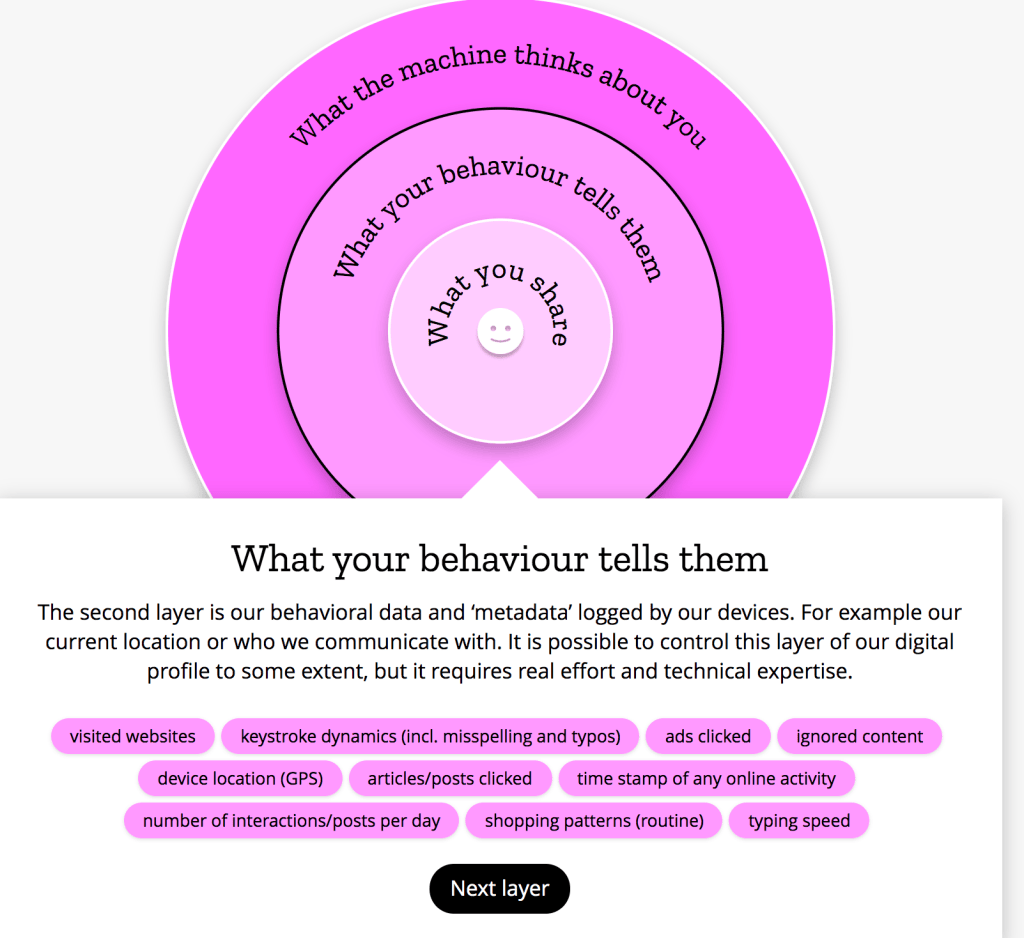
this is then followed by what our online behavior tells them this includes the websites we vistit, our geograhical location and how much time we spend and our activities.
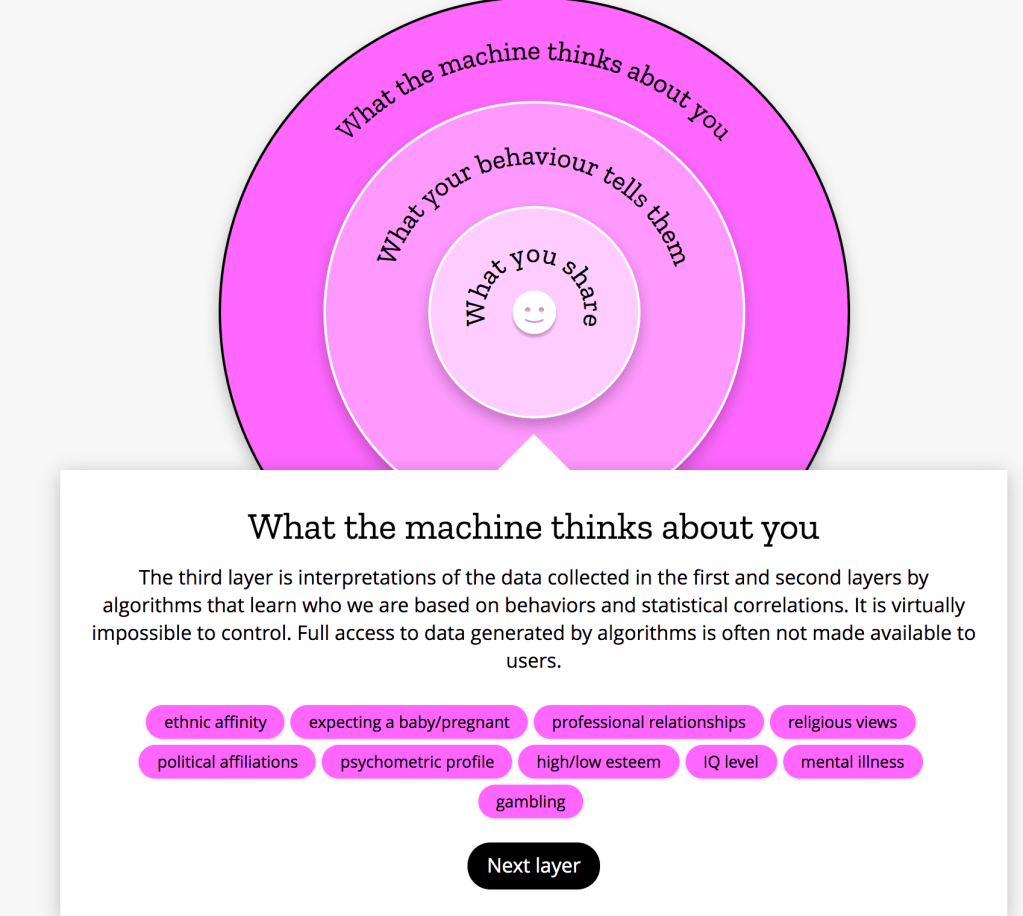
the last stage explains how the first and second stages are processed and assumptions are made from them about our lives.
the author then argues that if companies use a rather transparent and straightforward approach of asking us questions and respecting our answers they may even benefit from having more wholesome and accurate profiles that have little to no margin of uncertainty rather than drawing assumptions and conclusions whilst breaching our privacy. however, she also believes that we are nowhere near changing the existing mindset and have a long journey to convince companies of her ideology.
the last article is “breaking free of the addiction machine” this article discusses the staggering usage of smartphones nowadays, it discusses why we are “addicted” to machines. to begin with, it discusses that the time we spend online has increased for many reasons and not just the obvious “phones and internet connection” have become more accessible but rather because they have become convenient companions , acting as our alarm clocks, navigation systems and even memory enhancers. it also states that the evolution of apps to maximize engagement has also played a major role. they call this “addiction by design” and they have even compared them to how slot and casino machines are designed in order to put their users in a trance of some sort.
it also stated that while there was no correlation between technology use and wellbeing in teens, related factors did have for example wearing glasses had a negative effect on teens and it has been proven that many teens actually got glasses from endless hours on screens. it has also been reported that many suffer because of fear from data breaches and invasion of privacy and then go frantic in buying data detox kits and social media hiatuses and recently people have actually realized that maybe technological industries don’t have their best interest in mind.
many companies then responded by introducing features to their respective applications In order to limit screen time such as “including options to mute notifications for Facebook and Instagram and create time limits.” and apple creating the screen time app that allows you to effectively track screen time and where it is spent and then take control of it. however, the author argues that these options do not change the design that causes the addiction in the first place and that many of these companies should actually consider changing their business models o benefit their audience and take a step towards better wellbeing and safety

